
Ragdoll Fighter
Enderun StudiosArcade
4.3603.00 Reviews
- Version
- 1.0.7
- Installs
- 5.00M
- Age Rating
- Teen
Screenshots


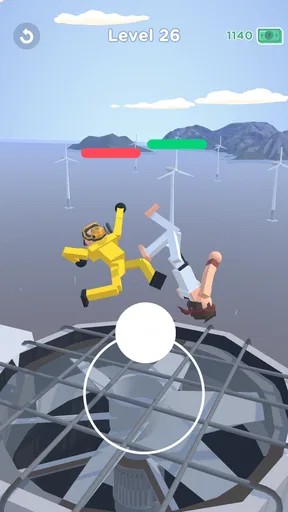
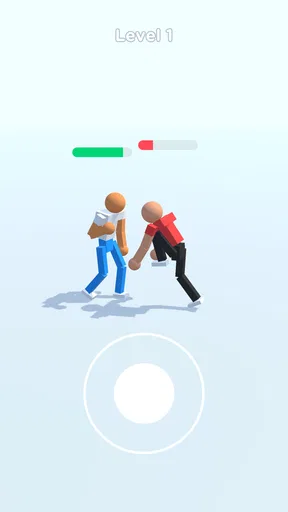
Our Review of Ragdoll Fighter
 Analysis by Appyee
Ragdoll Fighter is the kind of arcade game I can understand within seconds: I control a loose-limbed fighter, move into an opponent, and try to come out on top. That simplicity is its biggest attraction. I do not need a long tutorial or a complicated character sheet before a match becomes entertaining. The appeal comes from watching every clash turn into a slightly unpredictable physical scramble, then learning how to make that chaos work in my favor.
After spending time with it, I see a game built for short bursts rather than long, story-heavy sessions. It is free to download, made by Enderun Studios, and sits in the arcade category with a Teen content rating. Its store summary asks whether you can defeat the other fighters and become the next champion, but the more useful question is whether you enjoy compact battles where timing and positioning matter more than elaborate controls. If that sounds like your kind of mobile game, this one deserves a look.
My first impression: simple controls, immediate physical comedy
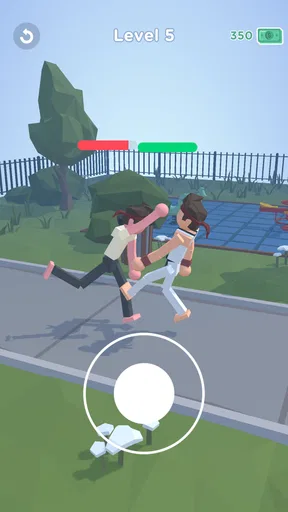
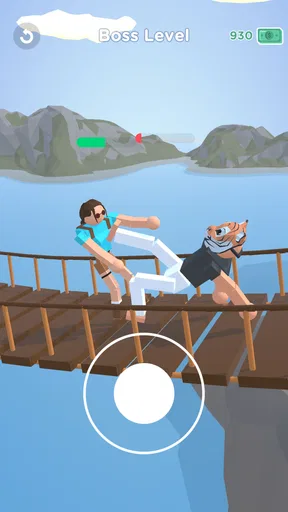
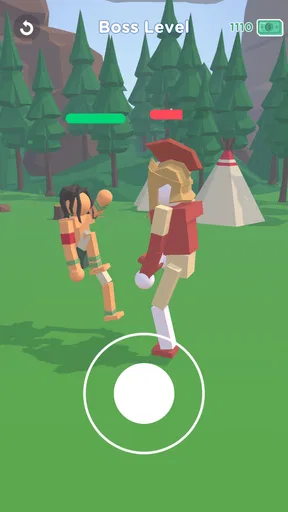
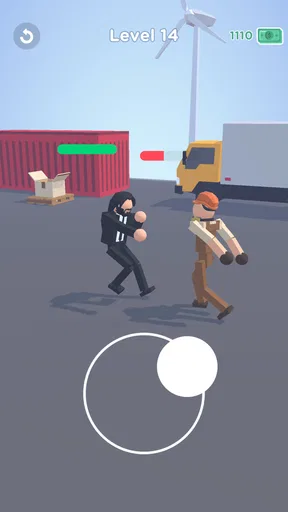
The first thing that stands out is the visual behavior of the fighters. They do not move like perfectly balanced martial artists. Their bodies react with a deliberately floppy quality, so a strike can look forceful, awkward, or unexpectedly funny depending on where it lands. That ragdoll presentation gives ordinary arcade exchanges a personality of their own. Even when I make a mistake, the result is often entertaining rather than merely frustrating.
This is important because the basic idea is not especially complicated. A conventional fighting game can hold attention with a large move list, character abilities, combos, or a detailed competitive structure. Ragdoll Fighter takes a different route. It makes the physical response itself part of the reward. I am not only trying to win; I am also watching how a collision changes the situation. A fighter knocked off balance may create an opening, but may also leave me exposed if I rush in carelessly.
The game works best when I treat each encounter as a small positioning puzzle. Charging directly at the opponent is tempting, especially when the controls feel accessible, but the loose movement means that momentum can quickly become a liability. I get better results by entering an exchange with a clear idea of where I want the opponent to end up. That may mean pressing forward at the right moment, backing away to avoid a bad collision, or waiting for the opponent to lose a stable stance.
One useful habit is to stop judging an attack only by whether it connects. A hit that leaves both fighters tangled together may be less valuable than a less dramatic contact that keeps my character upright and close to a favorable angle. This is one of the less obvious lessons in the game: the most spectacular impact is not automatically the smartest play. Once I started watching recovery and spacing instead of chasing every opening, matches felt less random.
The current version is 1.0.7, and the game remains easy to approach for mobile players who want a quick arcade challenge. It supports devices running Android 7.0 or later. That broad compatibility makes it a practical choice for people who do not use a recent phone, although the experience will still depend on how smoothly a particular device handles the action.
Why the art direction suits the gameplay
The visual style is not just decoration placed around a fighting system. The exaggerated bodies and physical reactions explain what kind of game this is before I have mastered it. The presentation tells me to expect instability, impact, and a little absurdity. That clarity is valuable on a small screen, where overly detailed visuals can make fast encounters harder to read.
I also like the way the simplified look leaves room for the motion to carry the mood. A realistic fighting game might ask me to focus on technical animation details or recognizable martial-arts form. Here, the appeal is more playful. A fighter can appear confident one moment and completely uncoordinated the next. That contrast keeps the action light even when I am replaying a difficult encounter.
There is a trade-off, though. Anyone looking for a deep combat fantasy with carefully choreographed attacks may find the ragdoll approach too loose. The same unpredictability that makes the game funny can make a loss feel less directly connected to a precise mistake. I sometimes knew that I had chosen the wrong moment to attack, but the exact chain of movement afterward was not always easy to read. Players who prefer strict, frame-focused control should approach this as a physics-flavored arcade game, not as a traditional technical fighter.
A setting that stays out of the way
The game’s setting functions mainly as a stage for the clashes rather than as a large world I explore. That is a sensible choice for this format. There is no need for a complicated narrative layer when the central pleasure comes from entering an encounter, understanding the space, and surviving the exchange. The restrained presentation keeps my attention on the fighters and the immediate problem in front of me.
This also helps the pacing. I can pick it up when I have a few spare minutes without first remembering a storyline, managing a large roster, or preparing a loadout. It feels particularly suited to the moments when I want something more interactive than scrolling but do not have the time or concentration for a long campaign.
In a typical everyday situation, I might play a few rounds while waiting for an appointment or during a short break. The game gives me an immediate objective, and the ragdoll reactions make even a brief session feel distinct. I do not need to commit to a long run to see the point. That convenience is one of its strongest practical qualities.
Sound, rhythm, and the mood of each encounter
The game’s mood depends heavily on rhythm. A ragdoll fighter can look amusing in still images, but the idea becomes much clearer when movement, impact, and recovery happen in sequence. The sound design supports that sense of physical timing by making contact feel like an event rather than a silent change in position. I pay closer attention to the moment of engagement because the action has a recognizable beat: approach, collision, wobble, recovery, and another decision.
I would not describe the atmosphere as intense in the same way as a serious combat simulator. Its energy is lighter and more cartoon-like. That makes repeated attempts easier to enjoy. A defeat can still be annoying, particularly when a fighter tumbles away from a promising position, but the presentation usually keeps the setback from feeling grim. The game wants me to try again with a slightly different approach, not dwell on failure.
The rhythm also affects how I use the game in short sessions. I do not have to build up slowly toward the fun. The action starts with a clear conflict, and the physical reactions provide enough variation to keep successive encounters from feeling identical. For me, that is more effective than a game that adds constant visual noise but gives every exchange the same emotional weight.
There is a subtle downside to this style. When the action becomes crowded or movements overlap, sound and motion can reinforce the feeling of chaos without always explaining exactly why the exchange ended badly. If I am playing while distracted, I can miss the small positional mistake that caused the loss. The best experience comes when I give each round at least a little attention rather than treating it as background entertainment.
How to use the rhythm instead of fighting it
My most useful adjustment was to stop tapping or moving simply because the opponent was nearby. The game rewards patience more than frantic input. I watch for the moment when the opponent is committed to an approach, then choose whether to meet that movement or let it pass. This reduces those messy encounters where both fighters collide without either one gaining a clear advantage.
Another practical tip is to think in short phases. During the approach, I focus on distance. At contact, I focus on balance and direction. Immediately afterward, I decide whether to continue pressure or create space. Breaking the action into those phases makes the physics easier to interpret. It also gives the sound and animation a useful role: they become cues for when one phase ends and the next begins.
I would especially recommend this method to players who initially describe the game as random. Some outcomes will still feel unpredictable, because that is part of the ragdoll concept, but careful timing reduces the number of situations where I am simply throwing my character into danger. The game becomes more satisfying when I accept a little instability while still making deliberate choices.
Where the mechanics fit, and where they do not
As an arcade game, Ragdoll Fighter succeeds by keeping the central loop readable. I face another fighter, try to gain the advantage, and work toward becoming the next champion. The structure is approachable enough for casual players, but there is still room to improve through better timing and positioning. I do not need to memorize a complicated command system to feel progress in my own play.
The main mechanical strength is the connection between movement and consequence. A poor approach can leave me vulnerable, while a well-timed engagement can shift the whole encounter. Because the fighters are physically unstable, I have to think about the aftermath of an action rather than only the initial hit. That gives the simple premise more depth than the store’s short description suggests.
It is also a good fit for players who enjoy watching systems produce unexpected moments. If I prefer every result to be perfectly repeatable, the loose-body physics may feel imprecise. If I enjoy adapting to a changing situation, the same quality becomes the reason to continue. The game sits closer to playful combat experimentation than to a serious esports-style fighter.
Compared with endless runners in the arcade category, this offers more direct interaction with an opponent and more room for moment-to-moment decisions. Compared with traditional fighting games, it asks for less memorization but gives up some precision and character-specific technique. Compared with physics-based party games, it feels more focused on winning individual confrontations than on creating a broad collection of mini-games. Choosing it over those alternatives depends on whether you want a compact duel rather than constant forward motion, deep combo practice, or a larger variety of activities.
The free entry point is helpful because I can test that style without paying first. The game includes in-app purchases ranging from $1.99 to $19.99 per item. I would keep that in mind if I were installing it for a child or for someone who dislikes purchase prompts. The Teen rating is another reason to check whether its tone and spending model suit the intended player. For my own use, the sensible approach is to enjoy the core arcade loop first and treat optional purchases as something to consider only if they genuinely improve my experience.
Who will enjoy it most
I would recommend it to players who like short matches, physical comedy, and games that are easy to start but reward a little observation. It is a good choice for someone who wants a break from runners and match-three puzzles without committing to a large download-driven hobby. It also suits people who enjoy replaying a simple encounter to see whether a different approach produces a better result.
It is less suitable for anyone seeking a substantial story, a serious martial-arts simulation, or a highly controlled competitive fighter. Players who become frustrated when physics create an unexpected outcome may prefer a game with fixed animations and more exact input feedback. Likewise, if I wanted a long-term progression system to manage between matches, this would not be my first choice. Its strength is the immediate encounter, not a large amount of surrounding structure.
One trade-off becomes clear after several sessions: the game’s accessibility can also limit its depth. I can understand the basic challenge quickly, but players who need a constant stream of new mechanics may reach the limits of the formula sooner than they would with a full fighting game. That is not a flaw in the concept; it simply defines the right expectations. I see it as a focused arcade toy with competitive tension, not as a replacement for a console-style fighter.
What the audience response suggests
The game has an average rating of 4.3 from around seven thousand ratings, with more than six hundred written reviews and over five million installs. Those figures place it among the more established choices in its small corner of mobile arcade games. I would not treat popularity as proof that every player will enjoy the physics, but it does suggest that the straightforward format and comic combat have found a sizeable audience.
For a new player, the most useful takeaway is that the game does not need to be approached as a demanding technical test from the beginning. I would start by learning how movement affects the next position, then pay attention to which attacks leave me stable. Once that feels natural, I would experiment with patience and spacing rather than trying to force every confrontation. That workflow gives the unpredictable presentation a fair chance to become skillful instead of merely chaotic.
My atmosphere verdict
Ragdoll Fighter creates a coherent mood by aligning its art, sound, setting, and pacing around one idea: fighting should feel physical, immediate, and a little ridiculous. The visual style prepares me for unstable movement, the sound gives collisions a sense of rhythm, and the compact setting keeps the focus on each encounter. None of those elements overwhelms the mechanics. Instead, they make the simple combat loop easier to understand and more enjoyable to revisit.
My favorite part is the way a small tactical improvement can change the tone of a match. When I rush without thinking, the game looks like a chaotic pile-up. When I wait, manage distance, and choose a better moment to engage, the same loose physics become something I can work with. That shift is the game’s most rewarding discovery, and it is also the clearest reason not to judge it after only one or two rounds.
There are limits. The physics can occasionally make outcomes feel less precise than I would like, and the focused formula will not satisfy players who want a deep roster, an involved story, or extensive long-term systems. The purchase range and Teen rating also deserve attention before sharing it with younger players. Still, those concerns do not undermine what the game is trying to do.
My final recommendation is simple: choose it when you want a quick, funny arcade duel built around timing and physical reactions. I would install it for short breaks, casual competition, or a change of pace from more predictable mobile games. I would skip it if my priority were exact fighting-game control or a substantial campaign. For the right player, Enderun Studios has made a compact experience whose atmosphere and mechanics support each other unusually well.
Only the name needs to be remembered: Ragdoll Fighter is at its best when I stop expecting perfect control and start treating every collision as a new problem to solve. That balance between intention and surprise gives its brief matches a distinct personality, and it is enough to make me return for another round.
Verdict
Strengths of Ragdoll Fighter
- Simple controls make it easy to start playing immediately.
- Physics-based combat creates funny and unpredictable moments.
- Short matches are ideal for quick gaming sessions.
- Unlockable fighters add variety to the gameplay.
- Works well as a casual game for players of different ages.
Limitations of Ragdoll Fighter
- Ragdoll physics can sometimes make attacks feel inconsistent.
- Gameplay may become repetitive after extended play.
- Progression can feel limited for experienced players.
- Ads may interrupt the experience between matches.
- Some fights depend more on luck than precise strategy.
Other Releases by Enderun Studios
View All
Slicing Hero Sword Master Game
Action4.5
Similar Picks in This Category
View All
Subway Surfers
SYBO Games4.6

Stickman Party 234 MiniGames
PlayMax Game Studio4.6

Subway Princess Runner
Ivy4.4

Temple Run
Imangi Studios4.2

Zombie Tsunami
Mobigame SAS4.6

Stack Ball - Crash Platforms
CASUAL AZUR GAMES4.5
Frequently Asked Questions
What is Ragdoll Fighter and how does the gameplay work?
Ragdoll Fighter is a physics-based fighting game where you control a flexible stick-like character in short, chaotic battles. Instead of relying only on traditional attack buttons, you move your fighter and use exaggerated ragdoll physics to punch, kick, dodge, and knock opponents away. Matches are generally easy to understand, but the unpredictable movement makes timing and positioning important, especially as enemies become stronger.
Is Ragdoll Fighter free to download and play?
Ragdoll Fighter can generally be downloaded for free, allowing players to access the main fighting experience without an initial purchase. However, free-to-play games may include advertisements, optional purchases, rewards, or other monetization features. Before downloading, users should check the current store listing because pricing, available content, advertising frequency, and in-app purchase options can vary depending on the device, region, and version of the game.
Does Ragdoll Fighter require an internet connection?
Many of the game’s basic battles can usually be enjoyed without a constant internet connection, which makes Ragdoll Fighter suitable for short sessions while traveling or when mobile data is unavailable. Nevertheless, an internet connection may be needed for advertisements, cloud features, updates, special events, or certain online-related content. Offline availability can also change after updates, so players should verify the latest requirements on the official app store page.
Is Ragdoll Fighter suitable for children and younger players?
Ragdoll Fighter uses cartoon-style characters and exaggerated physics rather than realistic violence, making its presentation relatively lighthearted. Even so, parents should review the age rating and the game’s advertising or in-app purchase settings before allowing younger children to play. The simple controls are accessible, but repeated battles, random movement, and promotional content may not suit every child, particularly without parental supervision.
What are the main advantages and disadvantages of Ragdoll Fighter?
The biggest advantages of Ragdoll Fighter are its simple controls, quick matches, humorous ragdoll physics, and pick-up-and-play design. It can be entertaining for players who enjoy casual action and unpredictable combat. On the other hand, the physics may sometimes feel difficult to control, battles can become repetitive, and advertisements or optional purchases may affect the experience. Its appeal depends largely on whether you enjoy arcade-style gameplay over precise fighting mechanics.
Play our best games!


